Managing Hurricane and Tropical Storm Damage on Florida Blueberry Farms
Florida has been affected by 11 hurricanes since 2000. As of this article’s writing, Hurricanes Helene and Milton are the most recent major storms to affect the state (September and October 2024). Although the 2025 season was largely quiet, and this Atlantic hurricane season is predicted to be a bit calmer due to the Super El Nino weather pattern, there is still uncertainty, and it is best to be informed and prepared.
Hurricanes and tropical storms can damage Florida blueberry farms in three main ways: wind damage, flooding, and disease resulting from plant injury or post-storm environmental conditions.
Wind Damage
Hurricane or tropical storm force winds can cause significant damage to blueberry plants, including cane breakage, dislodging, uprooting, and defoliation.
Dislodging and uprooting can damage plants and require substantial labor and materials to reset and stake them. Breakage of woody stems and roots can impair the transport of water and nutrients throughout the plant, resulting in stunted growth and severe plant stress that can persist for months. Wounds also provide entry points for stem and root pathogens, resulting in disease including Botryosphaeriastem blight, which can be observed long after the storm.
Significant defoliation and wind damage to remaining foliage were observed on some farms in south Florida after hurricanes in 2024 (Figures 1 and 2). Healthy foliage supports flower bud initiation and development in early fall. Defoliation during or just before this period can significantly affect bloom time and reduce the number of flower buds that develop, the number of berries produced per flower bud, or both. Defoliation and damage to remaining leaves can be particularly consequential in the evergreen production system, where maintaining healthy foliage is important for early yields of high-quality fruit.
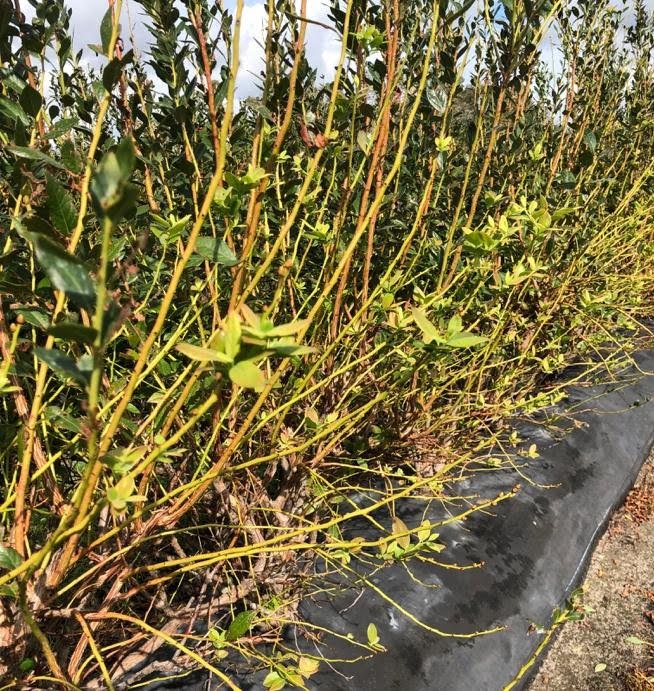
Figure 1. Defoliation from hurricane force winds
Credit: D. Phillips, UF/IFAS
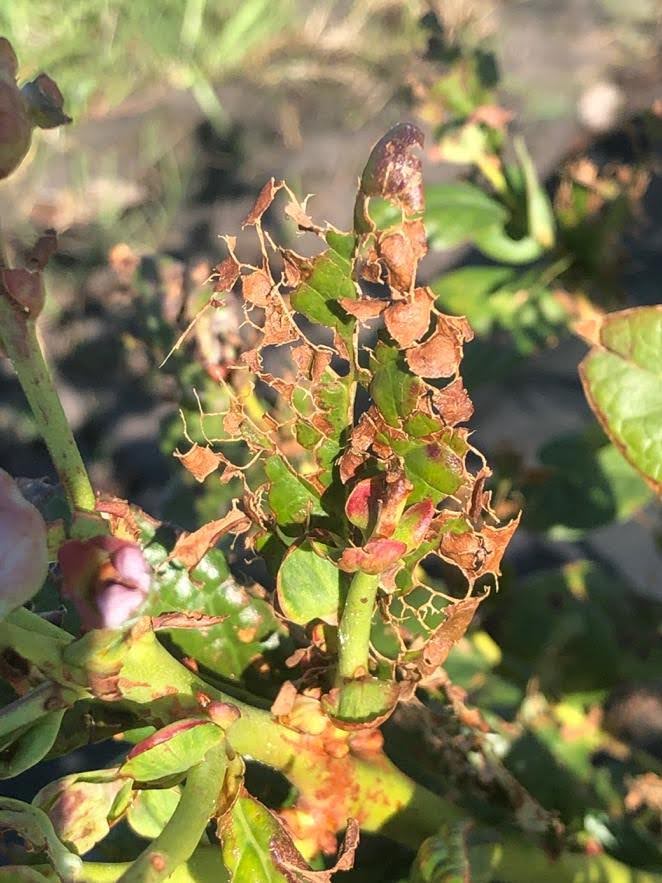
Figure 2. Blueberry leaf wind damage
Credit: D. Phillips, UF/IFAS
Flooding
Flooding in blueberry fields after a storm (Figure 3) can cause physiological injury and increase disease risk. Blueberry plants generally do not tolerate saturated conditions well.
Root death can occur when saturated conditions cause oxygen deficiency (hypoxia) in the root zone. Flooding can reduce root and overall plant growth, leaf number, leaf expansion, and nutrient uptake, and may result in smaller flower buds and fruit. Shortening the duration of flooding by pumping water from the field may help limit this damage. Saturated conditions and root wounds can favor Phytophthora root rot (see Ask IFAS Publication PP374, Phytophthora Root Rot on Southern Highbush Blueberry in Florida https://edis.ifas.ufl.edu/publication/PP374). Water can also spread the bacterial wilt pathogen Ralstonia solanacearum (see Ask IFAS Publication PP332, https://edis.ifas.ufl.edu/publication/PP332).
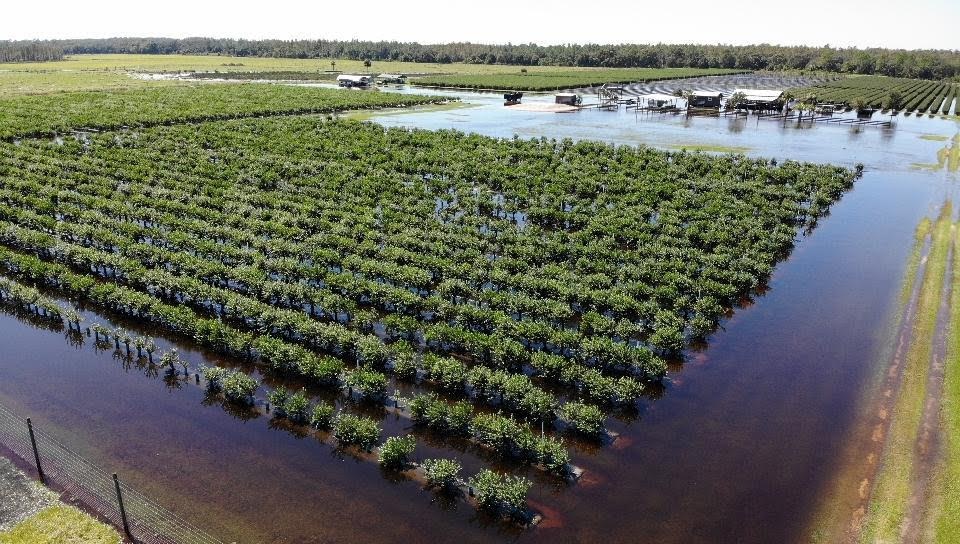
Figure 3. Post hurricane flooding in a Florida blueberry field
Credit: D. Chapman
Disease
Three factors must be present for infectious disease to occur in a blueberry field: (1) a pathogen capable of causing disease, (2) favorable environmental conditions for infection and disease development, and (3) a susceptible host. Each of these factors can be affected by a hurricane or tropical storm.
Pathogen—Rising water and high winds can disperse pathogens into and throughout a production field, including areas where they were not previously present.
Environment—Flooded soils and extended rain events associated with a major storm, along with typical hot and humid weather during summer and early fall, are ideal conditions for disease infection and continuing spread in blueberry plants.
Plant Host—Blueberry plants frequently experience significant stress from the types of storm damage discussed above. Wounded and stressed plants can be more susceptible to infection and disease development. Botryosphaeriastem blight can become more prevalent in stressed fields, and infected plants under stress are more likely to die from the disease.
Storm Recovery
Successful recovery from storm damage can be significantly helped by having good preparations in place before a storm hits.
Before the Storm — Farm Preparations
- Check fields for surface water drainage. Make sure that ditches, canals, areas between beds, and the ends of rows are clear and that water can flow freely out of production fields.
- Keep sufficient diesel fuel on hand to operate farm equipment and drainage pumps.
- Check that generators and chainsaws are working properly.
- Identify potential debris and secure items that may be propelled by strong winds before the storm.
- Purchase materials for resetting plants blown over during the storm (e.g., bamboo or fiberglass stakes and tie tape).
- Plan ahead for Phytophthora root rot management by obtaining mefenoxam-containing fungicides and phosphorus acid products (often called “phites”) labeled for use on blueberry. Confirm the exact product formulation and current label requirements before purchase and application.
- Take pictures and videos of the production areas before the storm, to document pre-storm conditions.
- Secure important records and documents, including production records, financial records, and insurance documents.
- The Florida Division of Emergency Management has additional hurricane preparation information at https://www.floridadisaster.org/planprepare/preparing-for-hurricane-season/.
After the Storm—Management Suggestions
The following best management practices should be consistently applied after a hurricane or tropical storm:
- Take pictures and videos to record damage for crop insurance purposes before beginning any cleanup or repairs.
- Contact crop insurance agent.
- Make sure your acreage and other information is up to date with FSA (www.farmers.gov).
- Reset and stake uprooted lodged plants as quickly as possible to reduce losses from desiccation and plant death.
- Examine irrigation systems when waters recede to make sure they are functioning properly.
- Repair raised beds and weed cloth and resume bed irrigation and pH monitoring, adjusting as necessary.
- Monitor moisture in the root zone before adjusting irrigation. Wilting does not always indicate dry soil: damaged or diseased roots may struggle to absorb water even when the bed is wet. Adjust irrigation to avoid both drought stress and prolonged saturation.
- Resume scheduled fertilizer applications after waters have receded and when beds begin to drain. Consider reducing the rates of nitrogen where plants have been stressed and then begin to slowly return to recommended timing and rates for the given deciduous or evergreen production system.
- Look for disease symptoms and insect pests. Apply management and control suggestions as appropriate; see Ask IFAS Publication HS1156, “2024 Florida Blueberry Integrated Pest Management Guide” (https://edis.ifas.ufl.edu/publication/HS380).
Ideally, applications of Ridomil or another mefenoxam fungicide that help prevent Phytophthora root rot will have already been made in early summer prior to hurricane activity. Two applications of these products per year are allowed, and where a second application was not made earlier, consider making that application prior to a predicted storm impact when possible. When not possible, the second application can be made after waters have receded either in a banded bed application or through certain irrigation systems. (Consult the product label for more details.) These applications can help prevent root rot development, but they will not cure severely affected plants or those dying from flooding (hypoxia). Also consider making foliar applications of phosphorous acid products (“phites”) when field conditions allow.
- If plants continue to decline or the cause of damage is unclear, contact your local UF/IFAS Extension agent for assistance with diagnosis and sample submission to the UF/IFAS Plant Diagnostic Center. Leaf discoloration, leaf loss, and dieback can result from several problems, so symptoms alone may not identify the cause.
- Good recordkeeping is important to document any losses suffered. Include detailed production records from prior years and pictures and video of all areas of the farm affected by the storm.
- Information on hurricane, disaster, and other assistance from USDA is available in Ask IFAS publication HS1485, Government Agency Resources for Florida Blueberry Growers (https://edis.ifas.ufl.edu/publication/HS1485).
- Recovery continues after floodwaters recede and cleanup is complete. Monitor affected areas in the weeks and months following the storm, watching for continued plant decline and delayed symptoms of diseases such as Botryosphaeria stem blight. Continued observation could help identify problems that were not apparent immediately after the storm.
CREDITS:
Doug Phillips, Blueberry Extension Coordinator, UF/IFAS
Dr. Phil Harmon, Professor, UF/IFAS
Dr. Jeff Williamson, Professor, UF/IFAS
Diego Cabezas, Assistant Breeder, UF/IFAS