Linking Colletotrichum Diversity to Better Anthracnose Management
The term “triple threat” is thrown around in sports, referring to a player with three talents, three skills in which they excel. The classic Gator example would have to be the Head Ball Coach, Steve Spurrier who won a Heisman Trophy for the 1966 season. He’s best known as a quarterback but ran the ball, and even kicked a few field goals, including the game-winning 40-yarder against Auburn. Percy Harvin comes to mind among the more recent Gators to play in the Swamp — return, rush, and receive. He kept Gator opponents on their toes. Okay, but what does that have to do with blueberries? Colletotrichum and its resulting disease, anthracnose: That’s our triple threat opponent when producing Florida blueberries. The better we know and understand that opponent and what it’s capable of, the better we can prevent taking the L.
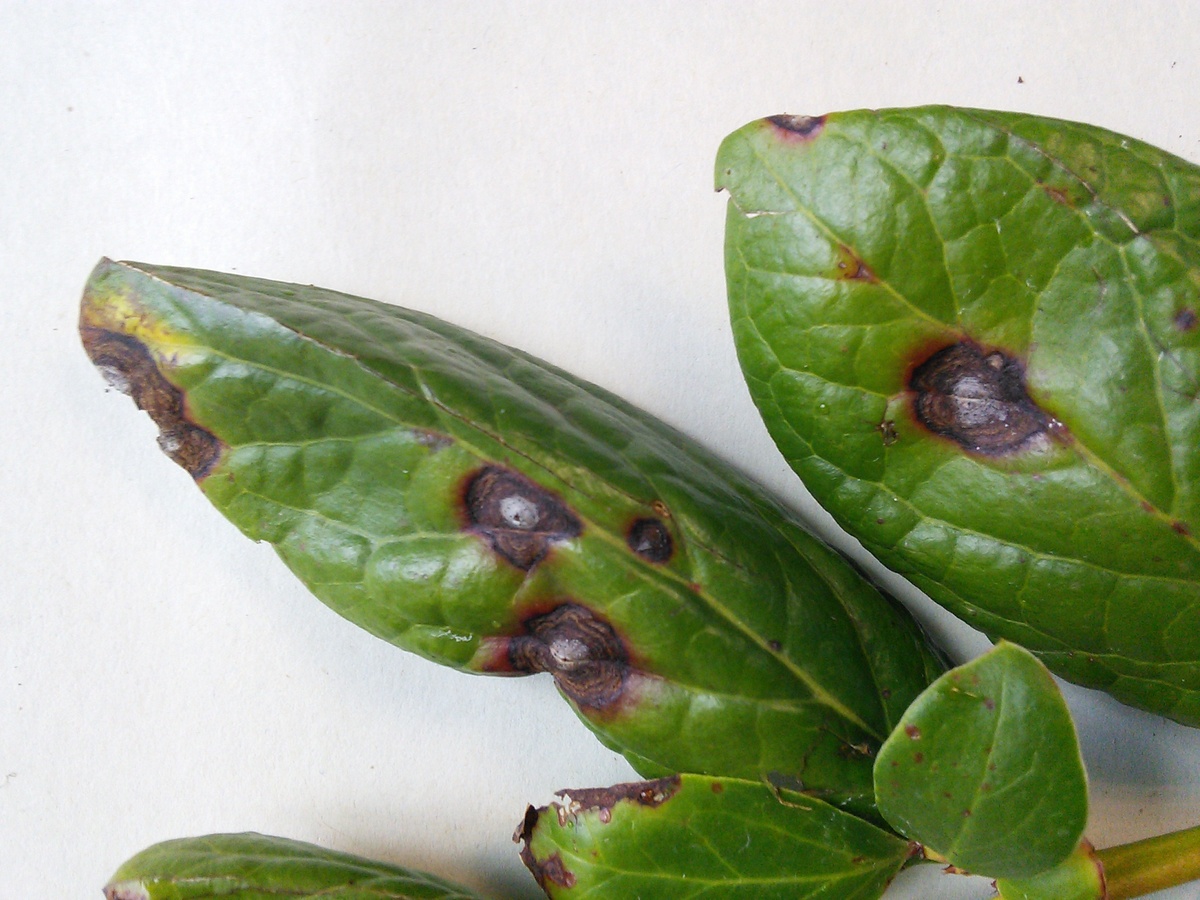
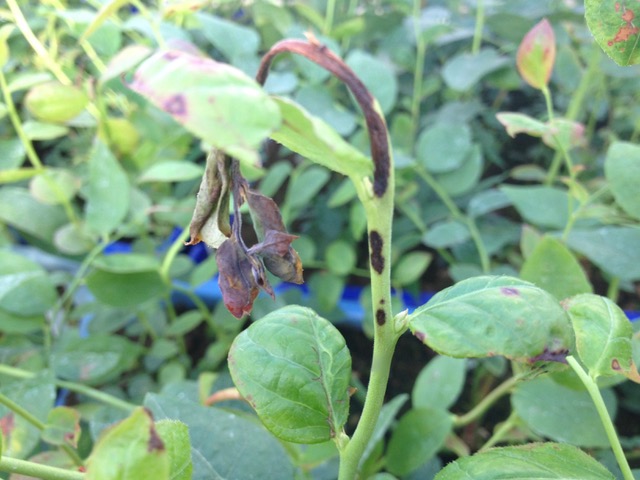
Anthracnose qualifies because the fungus that causes it can infect fruit, leaves, and stems. That’s significant because we have at least one of those three year-round. Stem lesions carry over and produce spores that can infect fruit and leaves starting at bloom. Evergreen plants also have leaf lesions that can contribute to the flower and fruit infections, adding to the disease pressure in that system. Stem lesions on most varieties are not severe or damaging beyond housing the pathogen between seasons. The variety ‘Flicker’ produced great while azoxystrobin fungicide was effective, and when it failed due to fungicide resistance, the variety quickly became challenging to grow to say the least. Other varieties started suffering from greater anthracnose fruit rot (AFR) problems from that point forward as well. But why? We recently received funding for our proposal to the UF/IFAS Blueberry Excellence in Science and Technology program to find out.
It’s not hard to get lost in the weeds when trying to understand the biology, but blueberry anthracnose is not caused by one uniform pathogen; it’s caused by a whole host of related species. Diversity is a strength from the pathogen’s perspective, and the data so far show several Colletotrichum species in distinct populations—including on common weeds—differ in their virulence on blueberry as well as their sensitivity to fungicides. Substantial diversity also exists among individuals (fungal strains) belonging to the same species, but its effect on disease is unclear. Our project seeks to uncover these natural differences in DNA among the pathogens causing anthracnose on our fruit, leaves and stems, but also those found on common weeds in our production fields.
Preliminary data suggest the pathogens from different plants (blueberry and weedy) and parts co-mingle and have important differences in their fungicide sensitivities, survival ability, and virulence. This increased diversity in our opponent can lead to greater management challenges that evolve more quickly than expected. By studying DNA differences across these samples, we will determine how the pathogen may be moving among production areas and between weedy and crop host plants. This will also support blueberry breeding programs and the development of durable and sustainable management strategies. We will couple this information with their response to fungicides in laboratory and field tests to try to understand how to optimize fungicide programs that continue to provide good anthracnose control across the state’s production area. We will be on the lookout for resistance to actives like fludioxonil that have recently been identified in populations from other crops, and in blueberry production in Georgia, to help better plan for alternative strategies in resistance monitoring and disease management and when those will need to be implemented.
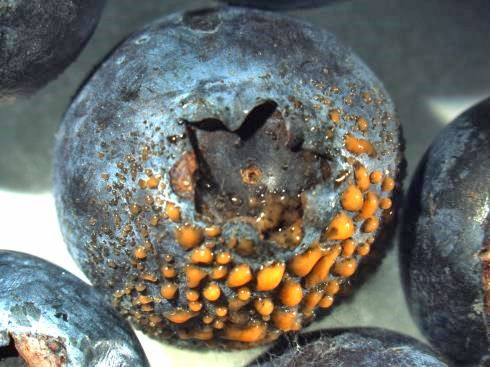
But for now, back to work. We appreciate the opportunity that the FBGA Research Committee in conjunction with the UF/IFAS Dean for Research Office, Blueberry Breeding Program, and The Florida Foundation Seed Producers have provided to study this important disease. We look forward to talking with you about our future results from this project at the next FBGA educational opportunity.
CREDITS:
Flávia Rogério, Postdoctoral Associate; Phil Harmon, Professor; Erica Goss, Professor; Brantlee Spakes-Richter, Associate Professor UF/IFAS Department of Plant Pathology & Doug Phillips, UF/IFAS Blueberry Extension Coordinator